Cookbook Template Recipe Book Design: A Modern Layout Guide
There is a specific kind of frustration that hits when you have a collection of brilliant recipes, but the presentation feels disjointed or amateurish. Whether you are a food blogger compiling your first eBook, a small business owner creating a branded corporate gift, or a crafter looking to preserve family heirlooms, the structure of the book is just as important as the food itself. This is where the Cookbook Template Recipe Book Design steps in. It is not merely a set of pages; it is a 16-page fully editable framework designed for Adobe InDesign that transforms a chaotic collection of notes into a polished, publish-ready product.
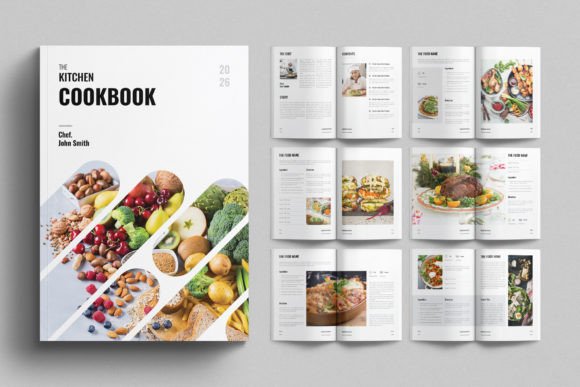
Unlike generic word processor layouts, this template is built on a foundation of modern typography and design principles. It embraces a minimal and elegant aesthetic, ensuring that your photography and culinary instructions remain the heroes of the page. The visual personality of the Cookbook Template Recipe Book Design is defined by clean lines, generous white space, and a neutral color palette that adapts instantly to your specific brand identity. It bridges the gap between a professional publishing house output and a DIY project, offering a sophisticated grid system that aligns text, images, and background elements perfectly.
The Anatomy of a Professional Layout
When you open the Cookbook Template Recipe Book Design in InDesign, the first thing you notice is the organization. It is designed to save you time, which is the most valuable asset for any entrepreneur or content creator. The file comes in multiple formats—INDD, INDT, and IDML—ensuring compatibility whether you are using the latest Creative Cloud suite or older versions like CS4. This forward-thinking approach means you aren't locked out of the design process based on your software version.
The template supports both International A4 and US Letter sizes, covering the two most common standards for digital downloads and print-on-demand services. One of the most critical technical details often overlooked by novices is the bleed size. This template includes a 3mm (0.125 in) bleed, which is essential for professional printing. Without this, your ink might stop short of the edge of the paper, leaving an unprofessional white border. By baking this into the Cookbook Template Recipe Book Design, the creators have removed a major technical hurdle for self-publishers.
Furthermore, the structural integrity of the layout relies on Master Pages. This feature allows you to set recurring elements—like page numbers, headers, or background textures—once, and have them apply automatically across all 16 pages. If you decide to change the position of the page number halfway through the project, you simply edit the Master Page, and the change cascades through the entire document. This is a hallmark of professional editorial design, ensuring consistency that readers subconsciously trust.
Visual Hierarchy and Brand Consistency
Design is ultimately about communication, and in a cookbook, visual hierarchy is the map that guides the reader's eye. The Cookbook Template Recipe Book Design utilizes Character and Paragraph Styles to manage this hierarchy. Instead of manually bolding every ingredient list or resizing every header, you define these styles once. For example, you can set "Recipe Title" to be a bold, display font, while "Instructions" are set to a highly readable sans serif font.
This separation of content and style is powerful. It ensures that if you want to tweak the typography later—perhaps making the body text slightly larger for better readability—you can do so in the style sheet, and the change will update every instance in the book instantly. This consistency builds brand identity. When a reader flips through your pages, the uniformity of the layout signals professionalism. It tells them that the content has been curated and vetted, which is crucial for building trust, especially if you are selling the book or using it to market a cooking business.
The template also excels in image integration. It treats images, text, and backgrounds as separate layers. This is incredibly practical. If you have a dark, moody photo of a steak, you can place it on the image layer without worrying about it obscuring your text boxes. Conversely, if you are working with bright, airy pastry shots, the neutral background palette provides a clean canvas that doesn't compete with the colors of the food. This layering system mimics the workflow used in high-end packaging design and web design, giving you granular control over the final output.
Practical Application: From Digital to Print
The versatility of the Cookbook Template Recipe Book Design makes it suitable for a wide range of applications beyond just a standard cookbook. Because it is built for Adobe InDesign, it handles high-resolution assets better than word processors or presentation software, making it ideal for commercial printing.
For the entrepreneur or small business owner, this template can be repurposed as a high-value lead magnet. Imagine offering a "5-Day Meal Plan" PDF to your email subscribers. Using this template elevates the perceived value of the freebie. It moves the document from a simple PDF to a digital asset that looks like a premium magazine spread. This perception of quality can significantly increase conversion rates and engagement.
For bloggers and content creators, the 16-page structure is perfect for a "Mini-Zine" or a seasonal collection. You don't always need a 200-page book. Sometimes, a curated collection of 10-12 recipes for the holidays is more marketable. The template allows you to drop in your content and export it for social media graphics or a digital flipbook on your website. The neutral color palette is particularly useful here, as it won't clash with the vibrant colors of food photography common on platforms like Instagram or Pinterest.
Even for personal use, such as crafters or hobbyists, the value is undeniable. Preserving grandmother’s recipes often involves scanning handwritten cards. The Cookbook Template Recipe Book Design allows you to pair those scanned images with clean, modern typography. You can use a script font or handwritten font for the quotes or personal notes, contrasting them against the clean structural grid of the template. This juxtaposition of the old and new creates a beautiful heirloom piece that can be printed and bound for family gifts.
Customization and Color Strategy
One of the standout features of this product is the "one-click" color adaptation. While the default neutral palette is safe and elegant, every brand has its own visual language. The Cookbook Template Recipe Book Design utilizes InDesign's color swatch capabilities effectively. By linking key design elements to specific swatches, you can change the entire mood of the document instantly.
If you are designing for a vegan health brand, you might switch the palette to earthy greens and kraft paper tones. If the book is for a high-end patisserie, perhaps pastels or metallics are more appropriate. Because the template uses CMYK color mode, you can be confident that the colors you see on screen will translate accurately to the printed page, provided your monitor is calibrated. This is a critical distinction between amateur design assets and professional ones; RGB is for screens, but CMYK is for ink.
Additionally, the template includes links to free fonts. This is a massive advantage for those on a budget. You don't need to purchase expensive premium font licenses to make the design work. However, the template is also a playground for typography enthusiasts. You can easily swap these out for your own preferred typeface pairings. For instance, you might pair a strong serif font for headers with a clean geometric sans serif font for body text to create a classic editorial look.
Maximizing Readability and User Experience
A beautiful design is useless if the content is hard to read. The layout of a cookbook presents unique challenges because recipes are instructional. They require a clear flow of information: Ingredients must be distinct from Instructions, and Prep Time must stand out from Cook Time.
The Cookbook Template Recipe Book Design addresses this through its grid alignment. Grids are the invisible skeleton of good design. They ensure that columns of text line up perfectly, creating a rhythm that is easy on the eyes. When text is aligned to a grid, the reader can scan the page effortlessly. This is vital for someone standing in a kitchen with flour on their hands, trying to read the next step in a recipe. The layout minimizes "visual noise," allowing the user to focus on the task at hand.
Furthermore, the use of Master Pages ensures that navigation is intuitive. If a recipe spans multiple pages, the consistent placement of headers and footers helps the user understand where they are in the document. This attention to user experience (UX) is what separates a professional publication from a simple document. By using this template, you are borrowing the design logic of major publishing houses and applying it to your own project.
Final Thoughts on Workflow Efficiency
In the world of digital assets, efficiency is currency. The Cookbook Template Recipe Book Design is not just a static image; it is a working file designed to streamline your creative process. The inclusion of a Help File is a thoughtful touch, particularly for those who might be new to InDesign. It lowers the barrier to entry, allowing marketers and hobbyists alike to produce work that looks like it was made by a seasoned graphic designer.
Whether you are creating a product to sell on Etsy, a portfolio piece for a client, or a sentimental gift for a wedding, the foundation of that project matters. This template provides a robust, flexible, and visually appealing foundation. It allows you to focus on the content—the flavors, the stories, and the photography—while the structure handles the heavy lifting of layout and alignment. It is a practical tool for anyone looking to elevate their visual communication and produce a tangible, high-quality result.